
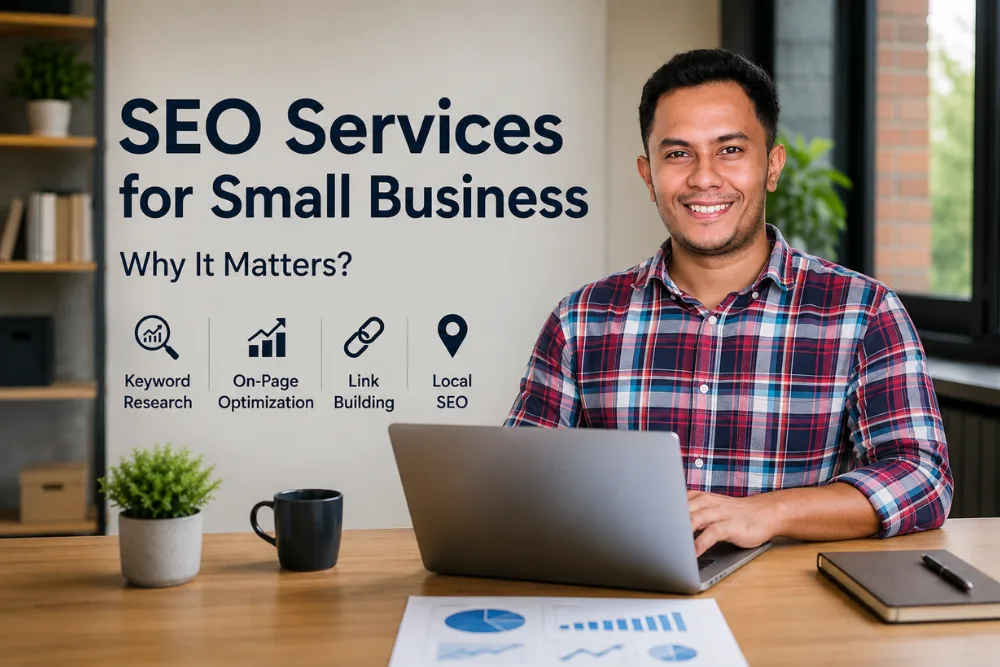
If you want your small business to attract more customers, generate qualified leads, and build long term online visibility, investing in SEO services for small business is one of the smartest decisions you can make. A well planned SEO strategy improves your search rankings, helps potential customers find your business, and delivers sustainable growth without relying only on paid advertising.
Starting a small business is exciting, but getting noticed online can feel overwhelming. Every day, thousands of businesses compete for attention on Google. While large companies often have massive marketing budgets, small businesses can still compete successfully by focusing on the right SEO strategies. Instead of trying to rank for every keyword, the goal is to become the best answer for customers searching for your products or services in your local area or niche.
The good news is that SEO does not require an unlimited budget. It requires a smart strategy, consistent execution, and patience. Whether you own a local service business, an online store, or a growing company, professional SEO services can help you build authority, increase website traffic, and turn visitors into paying customers.
Small businesses often face challenges such as limited marketing budgets, lower brand recognition, and intense competition. SEO helps level the playing field by allowing businesses to reach customers who are already searching for their products or services.
Unlike paid advertising, where traffic stops the moment you stop spending money, SEO continues delivering value over time. A well optimized website can generate leads and sales for months or even years with ongoing improvements.
SEO also builds trust. Websites that appear near the top of Google search results are often viewed as more credible by users. When your website consistently ranks well, customers are more likely to choose your business over competitors.
Successful SEO services for small business are built on four major pillars. These include local SEO, keyword research, on page optimization, and technical SEO. Together, these strategies help search engines understand your website while making it easier for customers to find the information they need.
Every small business should focus on creating a strong foundation before investing in advanced SEO campaigns. A well optimized website with valuable content and a great user experience often outperforms websites that rely on shortcuts or outdated tactics.
For many small businesses, local SEO delivers the quickest results because customers often search for businesses close to them. Whether someone needs a plumber, dentist, lawyer, electrician, restaurant, or digital marketing agency, they usually include a location in their search or rely on Google to show nearby businesses.
One of the first steps is claiming and optimizing your Google Business Profile. Every section should be completed accurately, including your business name, address, phone number, website, operating hours, business categories, and high quality photos.

Your business information should remain consistent everywhere online. Your website, business directories, social media profiles, and local listings should all display exactly the same business name, address, and phone number. Consistency helps Google trust your business information and improves local rankings.
Customer reviews are equally important. Positive reviews not only influence potential customers but also strengthen your local SEO. Encouraging satisfied customers to leave reviews and responding professionally to every review shows that your business values customer feedback.
Many small businesses make the mistake of targeting broad keywords that large companies already dominate. Instead, successful SEO focuses on specific keywords that reflect what your ideal customers are searching for.
Long tail keywords usually have lower competition and higher conversion rates. Someone searching for a very specific service is often closer to making a purchasing decision than someone using a general search term.
Each important page on your website should focus on one primary keyword. This prevents keyword competition between your own pages and makes it easier for search engines to understand each page.
Understanding search intent is equally important. Some users want information, while others are ready to buy. Blog articles should answer informational questions, while service pages should clearly explain your services and encourage visitors to contact your business.
On page SEO helps both search engines and visitors understand your website content. Every page should include a unique title tag and meta description that naturally include your target keyword while encouraging users to click.
Proper heading structure improves readability. Every page should have one clear H1 heading, followed by H2 headings for major sections and H3 headings where additional structure is needed. This hierarchy makes content easier to scan while helping search engines understand the page.
Internal linking is another important element of on page SEO. Linking related pages together helps distribute authority throughout your website while encouraging visitors to explore additional content. For example, a blog discussing website optimization can naturally link to your SEO service page.
Creating valuable content remains one of the strongest ranking signals. Rather than writing for search engines, focus on answering real customer questions with clear and useful information.
Technical SEO ensures that your website performs well for both users and search engines. Even the best content may struggle to rank if technical issues prevent Google from properly crawling and indexing your website.
Mobile responsiveness is essential because Google primarily evaluates the mobile version of your website. Every page should display correctly on smartphones and tablets with easy navigation and readable text.
Website speed also plays a major role. Slow loading pages increase bounce rates because users expect websites to load quickly. Compressing images, choosing reliable hosting, and minimizing unnecessary plugins all contribute to faster performance.
Website security is equally important. An SSL certificate protects user data while displaying the secure padlock icon in web browsers. Secure websites create trust and avoid warning messages that may discourage visitors.
Every successful SEO campaign begins with a clear action plan. Start by auditing your current website to identify technical issues, mobile usability problems, and page speed concerns.
Next, prioritize your most important pages. Your homepage, about page, and core service pages should each target a unique keyword that reflects your business offerings.
Once your website structure is organized, develop a simple process for requesting customer reviews after each completed project or purchase. Reviews strengthen both your reputation and your local SEO performance.
SEO should always be treated as an ongoing process rather than a one time project. Regular updates, fresh content, and continuous improvements help maintain strong search visibility.
| SEO Pillar | Strategy | Why It Matters |
|---|---|---|
| Local SEO & Google Business Profile | Claim and Optimize Your Google Business Profile (GBP) | Complete your business name, address, phone number (NAP), website, business hours, categories, and upload high quality photos. A fully optimized profile improves local visibility and attracts nearby customers. |
| Maintain NAP Consistency | Keep your business Name, Address, and Phone number identical across your website, Google Business Profile, social media, Yelp, Apple Maps, and local directories. Consistent information builds trust with search engines and improves rankings. | |
| Collect and Manage Customer Reviews | Encourage satisfied customers to leave Google reviews and respond professionally to both positive and negative feedback. Reviews strengthen credibility, improve local rankings, and increase customer trust. | |
| Strategic Keyword Research & Intent Mapping | Target Long Tail and Local Keywords | Focus on specific keywords that combine your service with your location, such as “Emergency Plumber in Austin Texas,” instead of broad and highly competitive terms. |
| Assign One Primary Keyword Per Page | Give each important page a unique target keyword to avoid keyword cannibalization and help search engines understand the purpose of every page. | |
| Match User Search Intent | Create blog posts for informational searches and optimized service pages for users ready to hire or purchase, improving both rankings and conversions. | |
| On Page SEO Optimization | Optimize Meta Titles and Meta Descriptions | Write unique and compelling title tags and meta descriptions that naturally include your target keywords and encourage users to click your website in search results. |
| Use Proper Heading Structure | Organize content using one H1 heading and logical H2 and H3 headings to improve readability and help search engines understand your page structure. | |
| Build Internal Links | Connect related pages throughout your website using descriptive anchor text. Internal links improve navigation, distribute page authority, and keep visitors engaged longer. | |
| Technical SEO & User Experience | Ensure Mobile Responsiveness | Make sure your website looks great and functions properly on smartphones and tablets since Google primarily uses mobile first indexing. |
| Improve Page Speed | Optimize images, reduce unnecessary plugins, and use reliable hosting to create a faster website that improves user experience and reduces bounce rates. | |
| Secure Your Website with HTTPS | Install an SSL certificate to protect user data, display the secure padlock icon, build customer trust, and avoid browser security warnings. |
Choosing an SEO provider is an important decision because the right partner can significantly impact your online growth. Before contacting agencies or consultants, define your goals. Do you want more local customers, increased online sales, or higher brand awareness? Clear goals make it easier to evaluate potential providers.
You should also understand your budget. SEO services vary depending on your industry, competition, and objectives. Knowing your available investment helps you choose a provider that matches your business needs without overspending.
Industry experience matters. A consultant who understands your business type can develop more effective strategies than someone using a generic approach. Ask for relevant case studies and examples of previous success.
Transparency is another important factor. Reliable SEO professionals explain their strategy, provide regular reports, and set realistic expectations. Be cautious of anyone guaranteeing instant rankings or promising first place positions on Google.
Communication also plays a major role. SEO works best when it becomes an ongoing partnership. Regular meetings, clear reporting, and honest discussions help ensure your strategy continues supporting your business goals.
Finally, research the provider thoroughly. Read reviews, request referrals, and ask detailed questions before making your decision. A trustworthy SEO consultant focuses on long term growth rather than quick wins.
Many small businesses do not have the budget to employ a full time SEO specialist. Hiring a freelance SEO consultant provides access to professional expertise without the overhead associated with a permanent employee.
An experienced consultant brings extensive knowledge across technical SEO, content strategy, keyword research, user experience, and website optimization. This expertise often produces faster and more effective results than learning through trial and error.
Professional SEO consultants also invest in premium software that would otherwise require significant monthly expenses. These tools help identify technical problems, competitor opportunities, keyword gaps, and performance improvements.
Outsourcing SEO allows business owners to focus on daily operations while the consultant handles website optimization and strategy implementation. This improves productivity across the business.
SEO consultants can also scale their services according to your needs. As your business grows, your SEO strategy can expand without requiring a major staffing investment.
Search engines frequently update their ranking algorithms. Staying current requires continuous learning and monitoring. A dedicated consultant follows these changes closely and adjusts strategies to protect your rankings.
Perhaps one of the biggest advantages is receiving objective insights. Business owners often become too familiar with their own websites. An external consultant can identify hidden issues, missed opportunities, and practical improvements that increase visibility and conversions.
Local businesses benefit especially from professional SEO because consultants understand how to optimize Google Business Profiles, improve local citations, and target location based keywords that attract nearby customers.
Many businesses unintentionally slow their SEO progress by making avoidable mistakes. One common issue is targeting too many keywords on a single page, making it difficult for search engines to understand the page’s primary focus.
Another mistake is neglecting local SEO. Businesses that serve specific geographic areas should always optimize for local searches instead of competing nationally for highly competitive keywords.
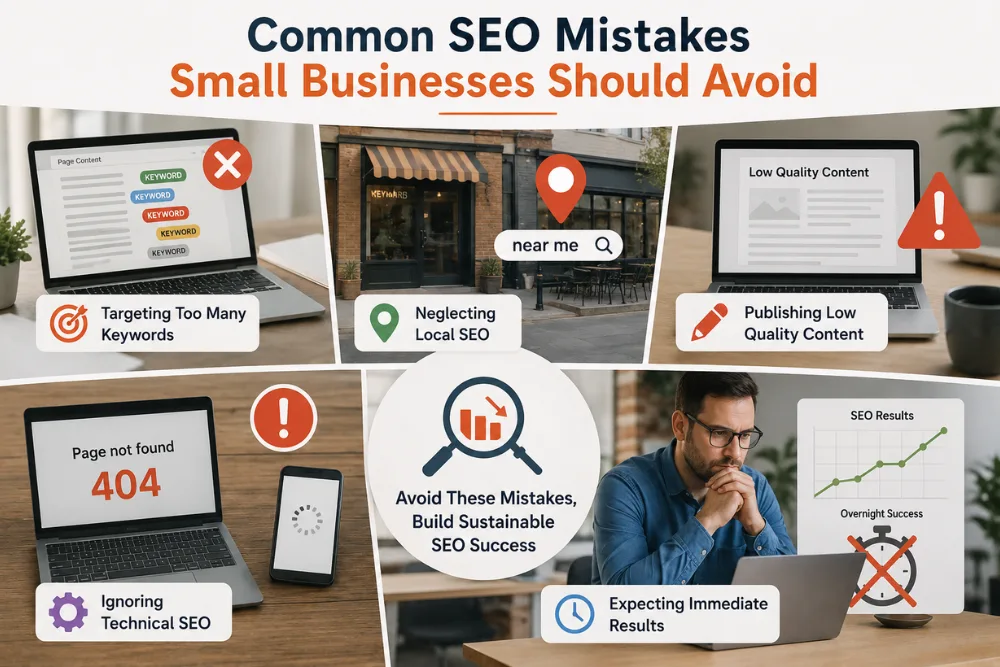
Publishing low quality content simply to increase the number of pages rarely delivers results. Every page should provide genuine value and answer real customer questions.
Ignoring technical SEO is another common problem. Broken links, slow loading pages, duplicate content, and poor mobile usability all reduce your ability to rank well.
Some businesses also expect immediate results. SEO requires consistency and patience. Sustainable rankings develop gradually through ongoing optimization rather than overnight success.
SEO is a long term investment. While some improvements such as technical fixes and local optimization may produce noticeable results within a few weeks, significant ranking improvements often take several months.
The timeline depends on several factors, including your industry competition, website history, existing authority, content quality, and overall SEO strategy.
Businesses operating in highly competitive industries typically require more time than businesses serving smaller local markets. Consistency remains the most important factor. Businesses that continue publishing quality content and improving their websites usually experience steady growth over time.
Tracking performance helps you understand whether your SEO investment is delivering value. Organic traffic is one of the most important indicators because it shows how many visitors arrive through search engines.
Keyword rankings provide additional insight into your visibility. Although rankings fluctuate naturally, consistent upward movement indicates positive progress.
Lead generation and conversions are even more valuable. Higher rankings matter only if they result in more enquiries, phone calls, bookings, or sales.
Monitoring local visibility, customer reviews, page speed, and user engagement also helps measure the overall health of your SEO campaign.
SEO services for small business provide one of the most effective ways to attract qualified customers, improve online visibility, and build sustainable business growth. By focusing on local SEO, strategic keyword research, on page optimization, technical improvements, and consistent content creation, small businesses can compete successfully with much larger competitors.
Choosing the right SEO service or freelance consultant can accelerate your progress by bringing expert knowledge, proven strategies, and ongoing optimization to your business. While SEO requires patience and continuous effort, the long term rewards often far outweigh the investment. Businesses that commit to quality SEO today position themselves for stronger rankings, greater trust, and lasting success in the years ahead.
References:
SEO for small businesses: Practical strategies to grow your visibility
SEO Strategies for Small Business Owners: 5 Simple Strategies That Actually Drive Traffic
9 Business Benefits of Hiring an SEO Expert
SEO services for small business are strategies designed to improve a company’s visibility in search engines through keyword optimization, technical SEO, local SEO, content creation, and website improvements.
Local SEO helps nearby customers find your business when searching for products or services in your area, increasing qualified leads and local enquiries.
Most small businesses begin seeing improvements within three to six months, although highly competitive industries may require additional time.
Yes. A fully optimized Google Business Profile improves local visibility, increases trust, and helps customers find your business more easily.
Basic SEO can be managed in house, but hiring an experienced SEO consultant often delivers better results because of their expertise, advanced tools, and understanding of current search engine best practices.
Look for proven experience, transparent reporting, realistic expectations, strong communication, relevant case studies, and ethical SEO practices.
SEO and paid advertising work well together. SEO provides long term organic growth, while paid advertising generates immediate visibility. For many small businesses, combining both strategies produces the strongest results.
SEO should be monitored continuously. Regular content updates, technical improvements, keyword reviews, and performance analysis help maintain and improve search rankings over time.