
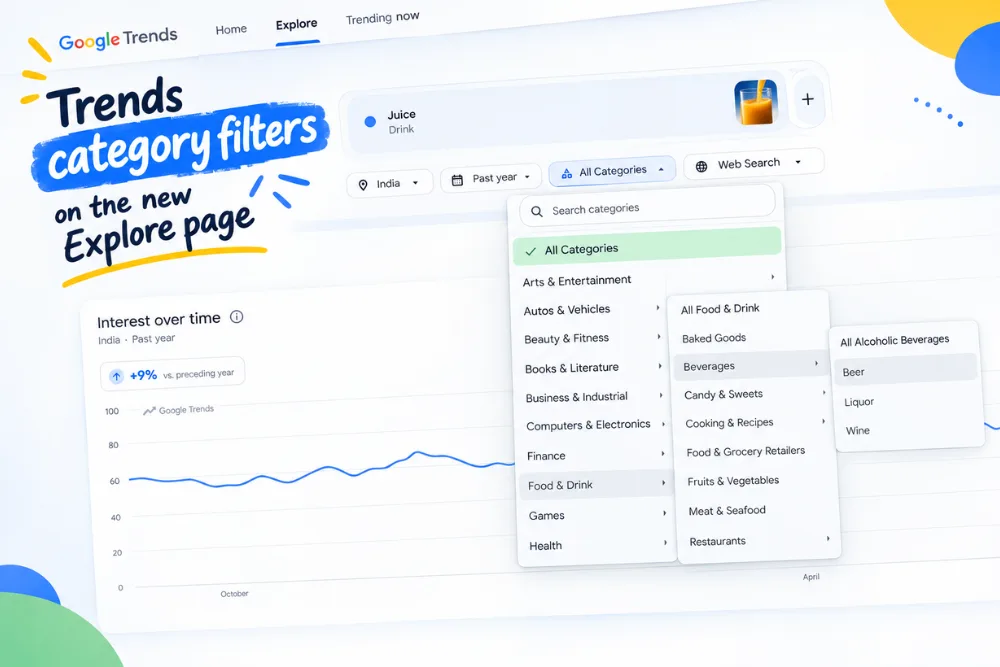
Google Trends has introduced category filters on its new Explore page, allowing users to explore search trends by predefined categories without entering a query first. The update makes it easier to discover category specific top searched terms across regions and timeframes, creating a faster starting point for SEO, keyword research, and content strategy.
Google Trends has added a new way for users to explore search data through predefined categories. Instead of starting with a specific search query, users can now select a category and explore what people are searching for within that area.
The feature is available on the new Explore page and gives users another way to investigate search demand. Google says the update makes it easier to refine Trends data more precisely for specific categories, including categories such as All Books & Literature.
For anyone who regularly works with search trends, this change could make the research process feel much more straightforward. Rather than immediately trying to think of a keyword or seed query, users can begin with a broader category and see what is already attracting search interest.
One of the most useful parts of the update is that a query is no longer required to begin exploring category specific trends.
Google specifically recommends applying the category filter without entering a query. This allows users to explore category specific top searched terms across selected categories, regions, and timeframes.
That small change can make a meaningful difference when starting research. Coming up with the right seed keyword is not always easy. Sometimes, you may know the industry or topic you want to investigate, but you may not know which search terms people are actually using.
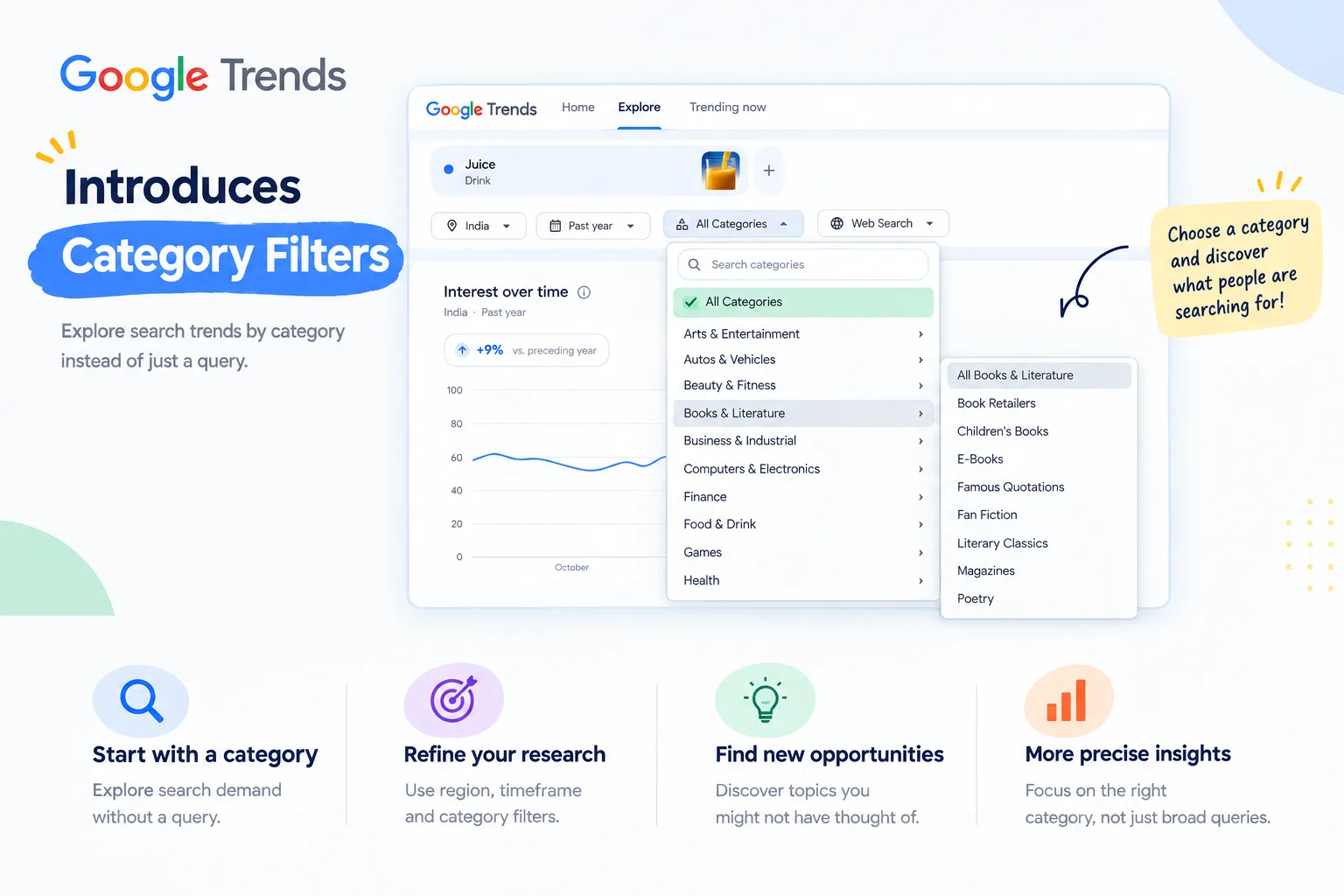
With the category filter, users can start from the category itself and let the available Trends data reveal potential areas of interest. This creates a different starting point for research and may help users discover topics they would not have thought to enter as queries.
Google announced the category filter update on LinkedIn, highlighting the ability to refine Trends data more precisely for specific categories.
Google said, “We’re excited to introduce Trends category filters on the new Explore page.”
The company also explained that the update makes it easier to refine trends data for specific categories such as All Books & Literature.
This is important because search terms can sometimes overlap between different areas. A broad query may produce information influenced by searches from several related categories. Selecting a specific category can help users focus their research more closely on the area they actually want to understand.
Google also shared a practical tip for using the new feature. Users can apply the category filter without entering a query to explore category specific top searched terms across different categories, regions, and timeframes.
The new feature could be especially useful at the beginning of traditional keyword research.
Usually, keyword research starts with seed queries. A researcher thinks of a few terms related to a business, product, service, or topic and then investigates the demand around those terms. The challenge is that the initial seed queries depend heavily on what the researcher already knows or expects.
Starting with a category provides another approach.
A user can choose a category, select a region and timeframe, and then examine the search patterns that appear. This can reveal demand patterns that might never have been discovered through manually entering seed queries.
From there, stronger themes can be identified and validated against Search Console, campaign data, and actual business relevance.
This does not replace traditional keyword research. Instead, it provides another starting point that can make the process more efficient.
One of the biggest opportunities with the update is discovering emerging topics.
When researchers begin with keywords, they are naturally influenced by the terms they already know. That can make research somewhat predictable. Category based exploration creates an opportunity to see what is gaining attention without having to guess the exact wording people are searching for.
This could be particularly useful for content strategy. A category can provide a wider view of search activity and help identify themes that deserve further investigation.
Once interesting terms or topics appear, they can be examined more closely through additional research. The strongest ideas can then be compared with Search Console information, campaign data, and the actual needs of a business.
That process can help turn Trends data into more practical content opportunities.
The category filters could be valuable for people working on SEO and content strategy.
SEO research often involves understanding what people are searching for, where they are searching, and how interest changes over time. Google Trends already provides useful information for this type of work, but the ability to start with a category adds another layer to the research process.
Instead of asking, “What keyword should I enter first?”, a researcher can start by asking, “What is happening in this category?”
That difference may sound small, but it can change the way research begins.
For example, someone working within a particular niche could select the relevant category, choose a region, and review search activity over a specific timeframe. The resulting information can then help shape further keyword research and content planning.
The approach could be particularly useful for niche focused research, including ecommerce, local SEO, and vertical specific SEO.
The update is expected to be especially relevant for niche focused research.
For ecommerce research, category level information could provide a broader view of search interest before specific product related queries are selected. This could help researchers identify areas that deserve closer attention.
For local SEO, being able to combine a category with a region and timeframe could make it easier to investigate search demand within a particular area.
For vertical specific SEO, category filtering can provide a more focused way to examine trends within a defined field.
The main advantage is the ability to begin with the category rather than relying entirely on an initial list of keywords.
Google Trends has supported category filtering in its classic version for years. The arrival of category filters on the new Explore page therefore reads more like parity between the classic and new experiences than a completely new capability.
Even so, bringing the feature to the new Explore page makes it easier for users who are working with the newer version of Google Trends.
The important change is not necessarily that category filtering exists for the first time. Instead, it is that users can now use the category filter on the new Explore page and explore category specific search activity without entering a query.
That makes the feature particularly interesting as an initial research tool.
The new category filter has the potential to make Google Trends a faster starting point for research.
Instead of spending time trying to identify the perfect seed keyword, users can begin with a category and examine the available search data. They can then narrow their research based on region and timeframe.
This approach can help uncover themes that might otherwise remain hidden during a traditional keyword research process.
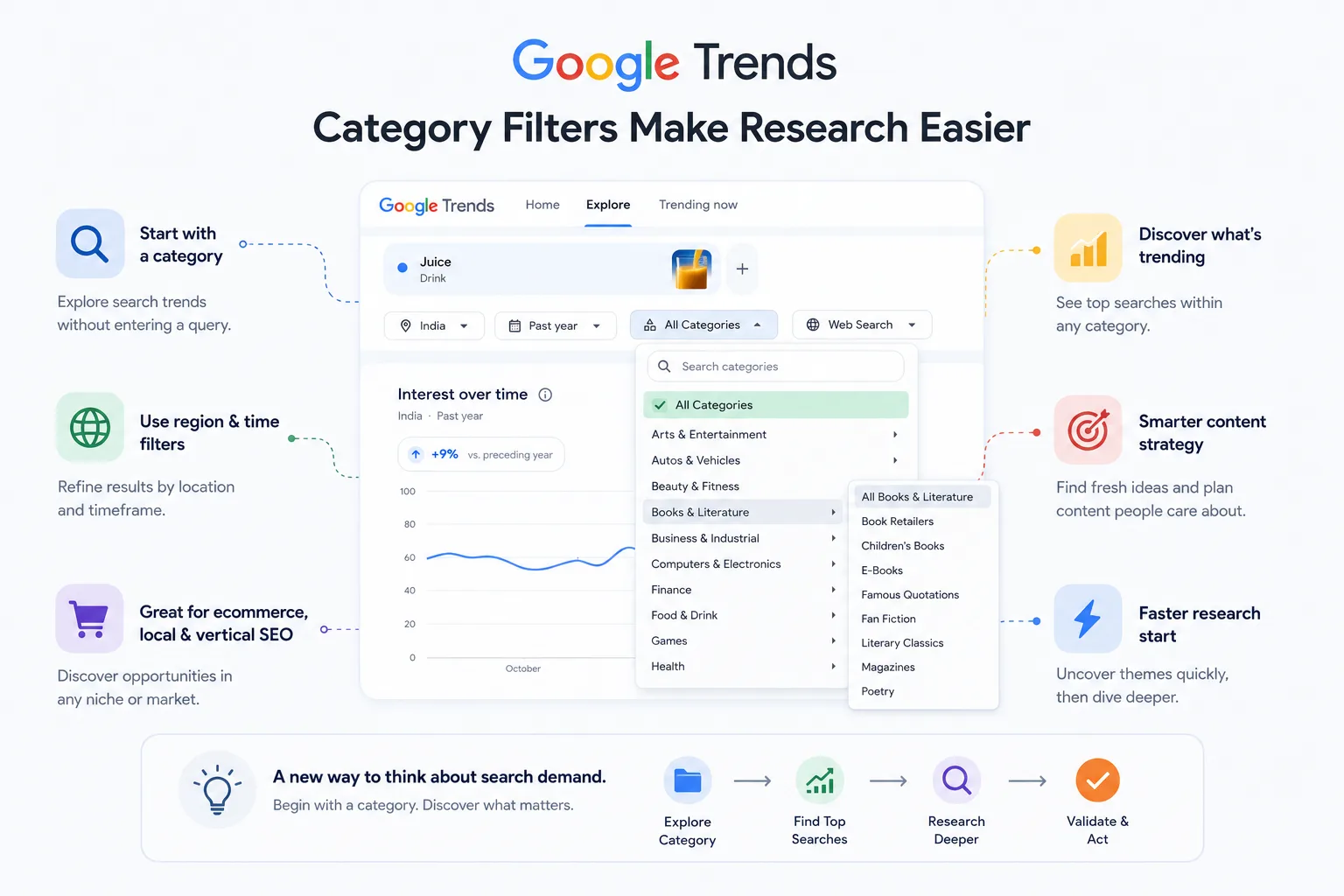
Once useful search terms are discovered, they can be investigated further. The strongest themes can then be compared against Search Console data, campaign information, and business relevance.
This creates a practical workflow where Google Trends helps with discovery, while other data sources help validate the opportunities.
Content strategy depends heavily on understanding what people want to find.
If researchers only work with keywords they already know, there is always a possibility that they will miss emerging interests or unexpected search patterns. Category based exploration provides another way to discover those opportunities.
The ability to see category specific top searched terms without entering a query could therefore be useful when planning new content.
A content strategist could begin with a broad category, investigate search activity across a region and timeframe, and then identify themes that appear interesting. Those themes can become starting points for deeper research.
The result could be a more flexible approach to finding content opportunities.
The most interesting aspect of the update may be the change in how researchers approach search demand.
Traditional keyword research often begins with a question about keywords. Google Trends category filtering allows the process to begin with a question about categories.
That means users can explore what is happening within a particular area before deciding which specific searches deserve attention.
This can be especially helpful when entering a niche where the researcher does not yet have a strong list of seed queries.
Rather than guessing where to begin, users can use category level Trends data to find potential directions and then continue with more detailed research.
Also read: Best Tools for Generating Alt Text for SEO Purposes
The update is a useful addition for anyone involved in SEO and content research.
Being able to filter by category without entering a query provides a faster way to spot category specific trending terms. It removes some of the guesswork involved in choosing initial seed keywords and gives researchers another method for discovering search demand.
Make a try over here
For niche focused research, this could make the overall workflow noticeably more efficient.
The strongest results will still need to be evaluated against other sources, including Search Console, campaign data, and actual business relevance. However, the category filter can provide a useful starting point for finding themes worth investigating.
Google Trends has added category filters to the new Explore page, giving users the ability to explore category specific search trends without entering a query first. The feature can help reveal top searched terms across categories, regions, and timeframes, making it a useful starting point for SEO, keyword research, and content strategy. While category filtering already existed in the classic version of Google Trends, its availability on the new Explore page makes category based research easier to access. For anyone looking to discover emerging topics or search demand without guessing seed keywords first, this update is certainly worth testing.
The new category filter allows users to explore Google Trends data using predefined categories on the new Explore page.
Yes. Google specifically says users can apply the category filter without entering a query to explore category specific top searched terms.
Yes. Google says users can explore category specific top searched terms across specific categories, regions, and timeframes.
No. The classic version of Google Trends has had a category filter for years. The update brings category filtering to the new Explore page.
The feature can help SEO professionals discover search demand and trending terms within specific categories before traditional keyword research begins.
Yes. Category based exploration can reveal emerging topics and search demand that may be missed when researchers start only with known seed queries.
The feature could be particularly useful for niche focused research, including ecommerce, local SEO, and vertical specific SEO.
No. The category filter provides another starting point for research. The strongest themes can still be validated against Search Console, campaign data, and actual business relevance.